Their own universe
Favorites, artists, playlists and discoveries without mixing their tastes into the parents’ library.
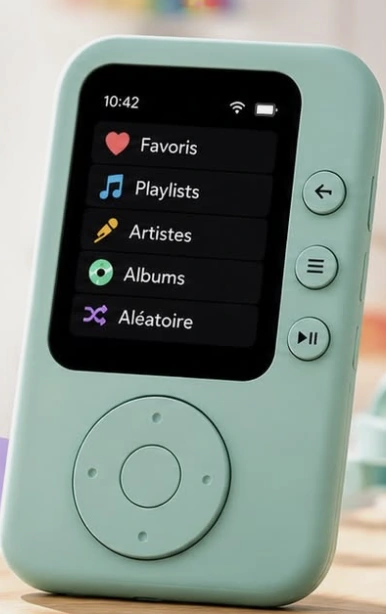
A connected music player designed for kids ages 4 to 12.
All the music they love, powered by the family streaming subscription. Without their own smartphone. Parents define the framework; children get a simple, stable music experience of their own.
Where it starts
We used to hold our music in our hands. Today it is available everywhere — but access almost always runs through a smartphone.
KidiMuze gives children personal access to the family’s music, without giving them the whole smartphone world.
Why KidiMuze
Favorites, artists, playlists and discoveries without mixing their tastes into the parents’ library.
An experience that grows from highly visual navigation into richer musical independence.
Music service, profile, network and essential rules: our goal is setup in just a few minutes.
No browser, social networks or app store inside the child experience.
KidiMuze uses the music service the family already chose, through authorized integrations.
For every age
KidiMuze currently targets children from roughly ages 4 to 12. The ages are only a guide: parents choose the mode that best fits reading ability, habits and independence.
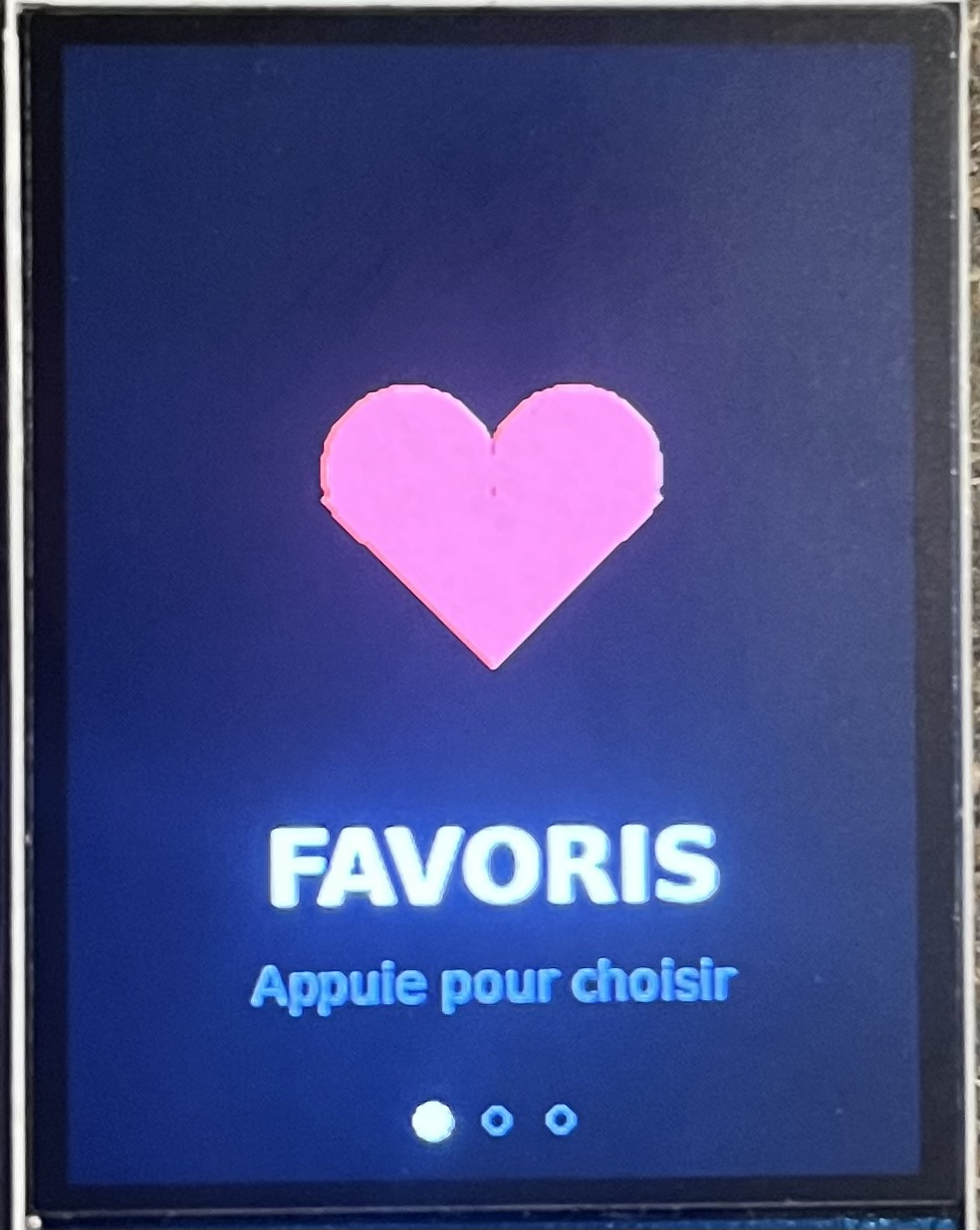
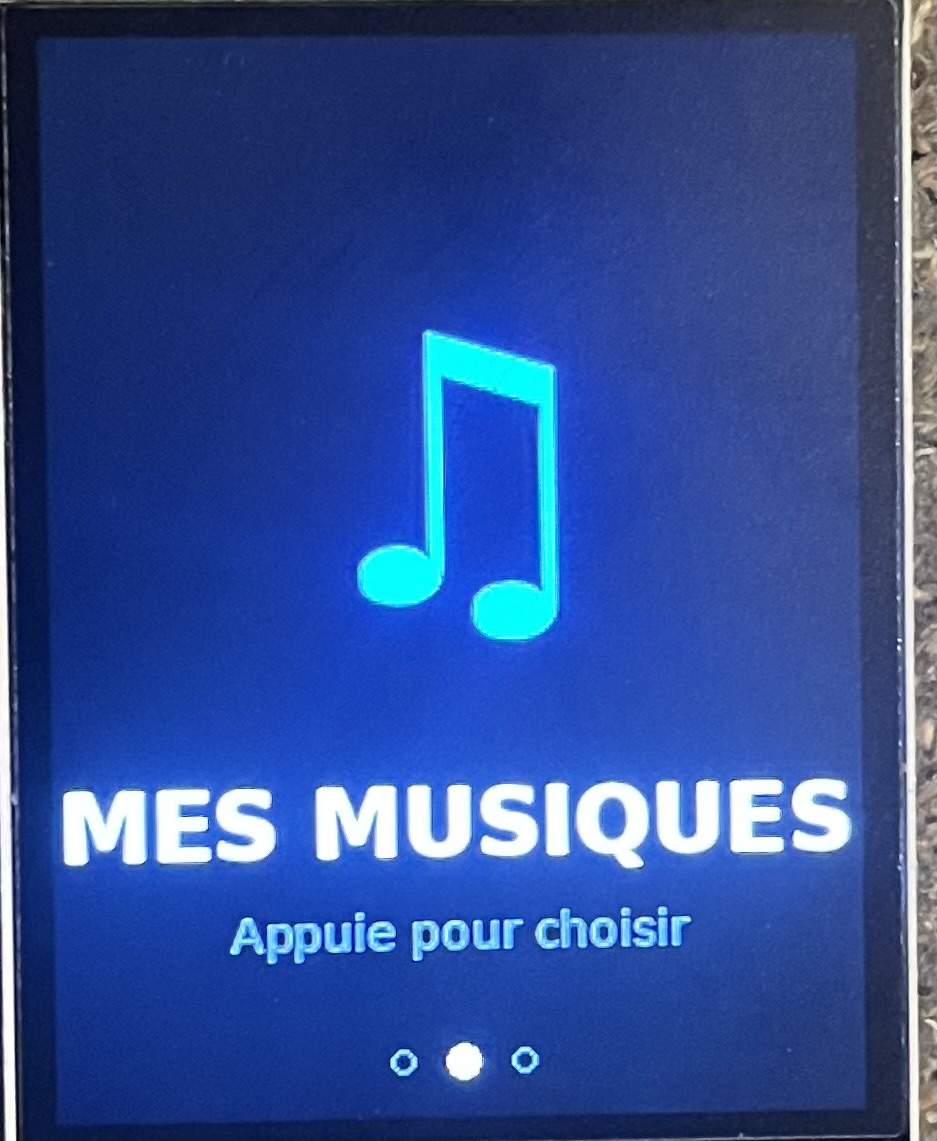
The screenshots below come from the historical prototype developed under the working name KIDiO.
Three immediate anchors, even before they can read.
Favorites, My Music and Discover are presented as large visual worlds. Voice guidance can complement the screen while music is not playing.



More depth as independence grows.
Artists, favorites, playlists, Discover and Now Playing become available through richer navigation, while the child remains inside the KidiMuze interface.
Age ranges are guideposts, not rules: KidiMuze adapts to the child’s real profile.
Real screenshots from the historical KIDiO POC — the brand is evolving; the technical proof remains the same.
Discover new music
Already workingWith Apple Music, favorites feed the Discover stream; with Spotify, discovery uses the service’s native recommendations. KidiMuze then presents new tracks to explore, while keeping the child inside the KidiMuze interface.
Apple Music and Spotify: favorites, the Discover screen and real playback within the KidiMuze child interface, at the POC stage.
Refine personalization, the KidiMuze profile and parental rules without changing this simple loop.
Their library. Not their parents’.
Favorites management and Discover are already working. The next step is to turn them into a true KidiMuze library belonging to the child: their tastes, discoveries and eventually listening history, kept separate from the adults’ music universe.
Making favorites, playlists and preferences a KidiMuze layer rather than a simple copy of provider data would create a musical memory that belongs to the child profile.
Their universe stays KidiMuze
Apple Music today, perhaps Spotify tomorrow — or the other way around. Our ambition is for what truly belongs to the child experience to remain attached to their KidiMuze profile, independently from the family’s current music service.
Child profile, favorites and playlists created in KidiMuze, preferences, parental rules and, eventually, listening history are intended to belong to KidiMuze.
When the family changes service, KidiMuze will aim to find the corresponding tracks in the new catalogue whenever possible, without promising a 100% migration.
Algorithmic recommendations, exclusive content and some service-specific data may remain specific to Apple Music, Spotify or another provider.
The service changes. Their KidiMuze stays the same. This continuity still needs to be built and measured against real catalogues before it becomes a commercial promise.
Two spaces, one simple experience
Our product goal: initial setup in about 5 minutes, followed by an independent everyday experience for the child.
The parent app shown here is an interface concept, not the final product yet.
The experience before the platform
KidiMuze is not designed to place several music apps side by side. The goal is for the family’s chosen service to feed KidiMuze in the background while the child keeps the same interface, the same profile and, progressively, the same musical memory.
As of 20 September 2026, Apple Music and Spotify are both fully operational at the POC stage: real full-track playback, navigation, playlists, favorites, discovery and play/pause/next/previous controls within the KidiMuze interface. Apple Music uses MusicKit, and Spotify uses Soloist and the Web API. Children use KidiMuze without opening the platforms’ apps. Commercial availability remains to be validated.
The goal is for KidiMuze to carry favorites, playlists, preferences and other child-profile data rather than leaving them entirely dependent on the current provider.
KidiMuze will aim to find equivalents in the new catalogue whenever possible. The real preservation rate must be tested before any quantified promise is made.
Brands are mentioned only as services being evaluated or technically tested. KidiMuze does not currently announce any official partnership. Any commercial integration or portability remains subject to the relevant provider’s agreements, rights, APIs/SDKs, catalogues and terms.
Connectivity grows with KidiMuze
Two distinct product steps: a simple, realistic Wi‑Fi V1, then a KidiMuze Anywhere vision with integrated mobile connectivity.
The first version remains a connected player: it joins authorized Wi‑Fi networks and can use a parent phone hotspot while on the go.
A future version could integrate its own mobile connectivity — eSIM / 4G envisioned — so it no longer depends on a parent’s phone.
The project today
Validated
Small display, rotary control, click, back, audio and battery are already used on the physical prototype.
Validated
Both experiences coexist on V0. Favorites and the Discover stream are working, with favorites already feeding discovery.
Validated
Authentication, navigation, playlists, favorites, discovery, real playback and playback controls are operational within KidiMuze. Autonomous prototype reboot has also been demonstrated.
Validated
OAuth authentication, catalogue search, navigation, playlists, favorites, artists, real full-track playback, Now Playing and play/pause/next/previous controls are operational. Discover uses native Spotify recommendations within the KidiMuze child interface.
Validated
Active playback keeps KidiMuze on. Pause plus two minutes without interaction triggers a clean shutdown. Validated in both Young and Grown interfaces.
Next step
Build the KidiMuze profile layer, then measure on real Apple ↔ Spotify tracks and playlists how much content can be reliably found again when the family changes music service.
Parents, partners, music lovers
FAQ
That is exactly what KidiMuze is designed for: the parent connects the family music subscription, then the child listens and explores from their own dedicated KidiMuze player. They do not need to own or handle a personal smartphone.
KidiMuze currently targets roughly ages 4 to 12. Young Mode prioritizes icons, large visual entry points and voice guidance for younger children; Grown Mode opens richer navigation. Age is only a guide: parents choose the mode that fits their child.
Favorites management already works in the prototype. The target architecture is now to turn those favorites into a KidiMuze library specific to the child profile, so their tastes are not mixed with the adult account.
This is one of KidiMuze’s key ambitions: keep what belongs to the child profile — such as KidiMuze favorites and playlists, preferences and eventually listening history — then try to find the corresponding tracks in the new service whenever possible. Portability is still in development: it cannot be guaranteed at 100% and will depend on catalogues, APIs, rights and available versions.
Discover is fully operational at the POC stage with Apple Music and Spotify, within the KidiMuze child interface. Favorites feed discovery with Apple Music; Spotify uses its native autoplay recommendations. Children explore and listen without opening the service’s app. More detailed parental rules and advanced personalization remain in development.
Apple Music and Spotify are both fully operational at the POC stage: real full-track playback, navigation, playlists, favorites and playback controls within KidiMuze. Apple Music uses MusicKit; Spotify uses Soloist and the Web API, with OAuth authentication, catalogue search, artists and Now Playing. A Deezer POC is underway; contact has been made with Amazon Music and access arrangements remain to be clarified. These technical validations do not constitute commercial availability or an official partnership. Any commercial integration remains subject to the relevant service’s agreements, rights and terms.
The planned V1 uses home Wi‑Fi or a parent’s hotspot. KidiMuze Anywhere is a V2 vision with integrated mobile connectivity, designed to work wherever mobile coverage is available without depending on a parent’s phone. That version and its subscription model still need to be validated.
The project is still in prototyping and validation. No commercial launch date is being announced at this stage.